Vienna, Austria · 1529 / 1683
The Sieges of Vienna: The Gate Where the Ottomans Stopped
Suleiman in 1529, Kara Mustafa Pasha in 1683: the furthest Ottoman goal in Central Europe.
From the gates of Vienna to the bridges of Bosnia: mosques, bridges, tombs and stories the Ottomans left behind in Europe.
Vienna, Austria · 1529 / 1683
Suleiman in 1529, Kara Mustafa Pasha in 1683: the furthest Ottoman goal in Central Europe.
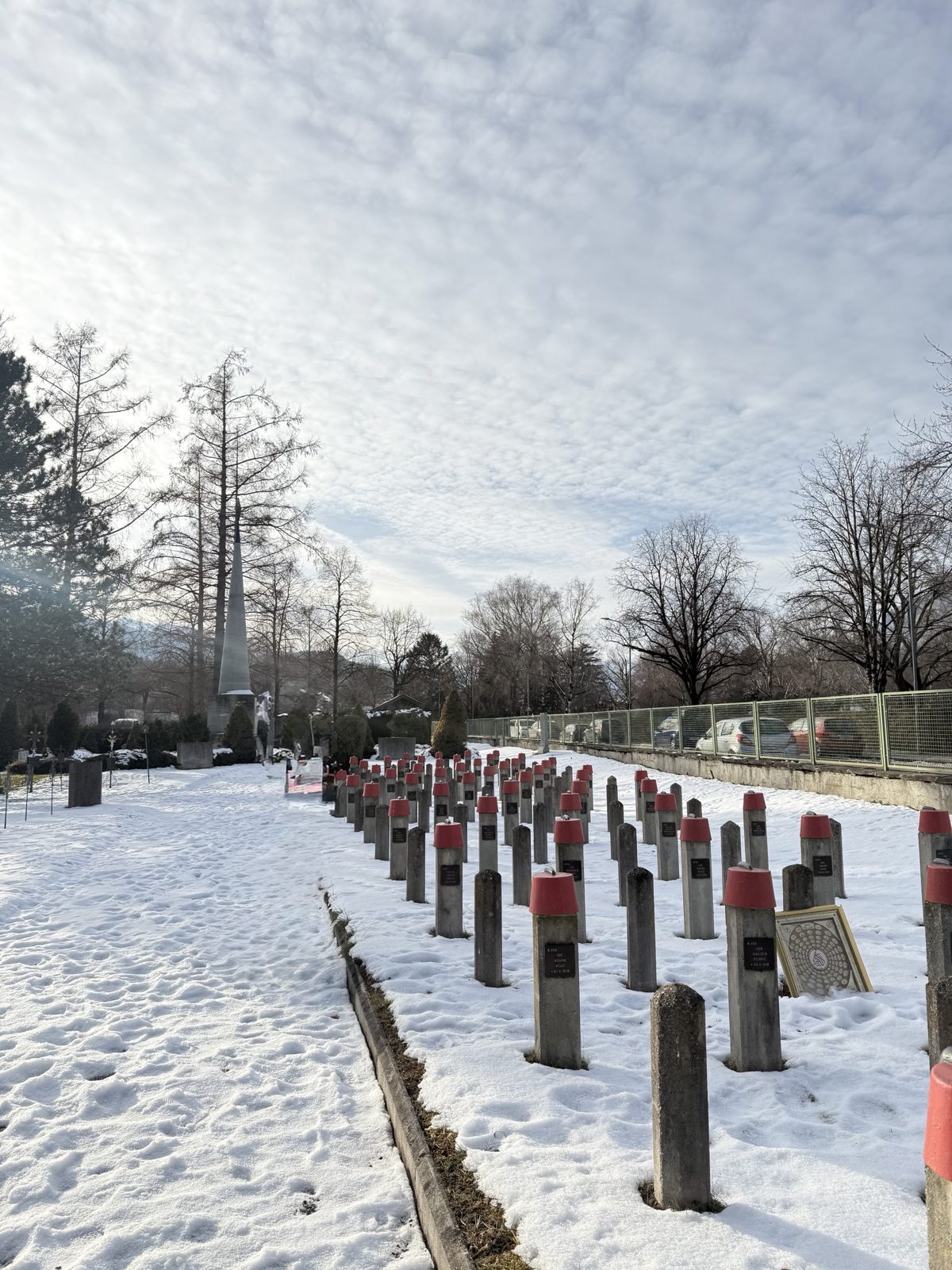
Innsbruck, Austria · 1918
The soldiers of 1918 beneath the red-fezzed stones were not Ottomans but Bosnians of the Habsburg army – yet their story leads back to the Ottoman legacy.
Szigetvár, Hungary · 1566
The Hungarian town where Suleiman the Magnificent died in 1566, and the recently rediscovered site of his tomb.
Mohács, Hungary · 1526
The field where Suleiman the Magnificent defeated the Hungarian army on 29 August 1526, and today's memorial park.
Mostar, Bosnia and Herzegovina · 1566
The single-arch bridge completed by Mimar Hayreddin in 1566, destroyed in 1993 and rebuilt in 2004.
Višegrad, Bosnia and Herzegovina · 1577
The bridge Grand Vizier Sokollu Mehmed Pasha commissioned from Mimar Sinan for his homeland, and Ivo Andrić’s novel.
Sarajevo, Bosnia and Herzegovina · 1531
A complex founded by an Ottoman governor and the bazaar that grew around it: the heart of Sarajevo.
Belgrade, Serbia · 1521
The fortress above the meeting of the Sava and Danube bore witness to Ottoman rule from 1521 to 1867 and the changes of hands in between.
Venice, Italy · 1621
The Grand Canal building that housed Ottoman merchants for more than two centuries, a famous portrait of Mehmed II, and memories of Lepanto.
Rome, Italy · 1489
After losing the throne to his brother Bayezid II, Mehmed II's son Cem became a hostage in Europe and spent years in the papal palace.
Pisa, Italy · 1571
In the church of the order the Medici founded to fight Ottoman and corsair ships, more than sixty flags captured at sea still hang.
Fondi, Italy · 1534
Hayreddin Barbarossa's raids of 1534 and 1544 and the watchtowers lining southern Italy's coasts: stone traces of Mediterranean fear.
Bologna, Italy · 1683
Luigi Ferdinando Marsili, a Bolognese soldier and scientist captured by the Ottomans in 1683, gathered Ottoman manuscripts that are still in Bologna today.