After the conquest of Constantinople, Mehmed II first used a palace near today’s Beyazıt, later known as the Old Palace. He then had a new one built at the eastern tip of the city, on the headland where the Marmara Sea meets the Golden Horn. From the later 15th century until the mid-19th, Topkapı Palace was where the sultans lived and the empire was run.
Three courtyards, one order
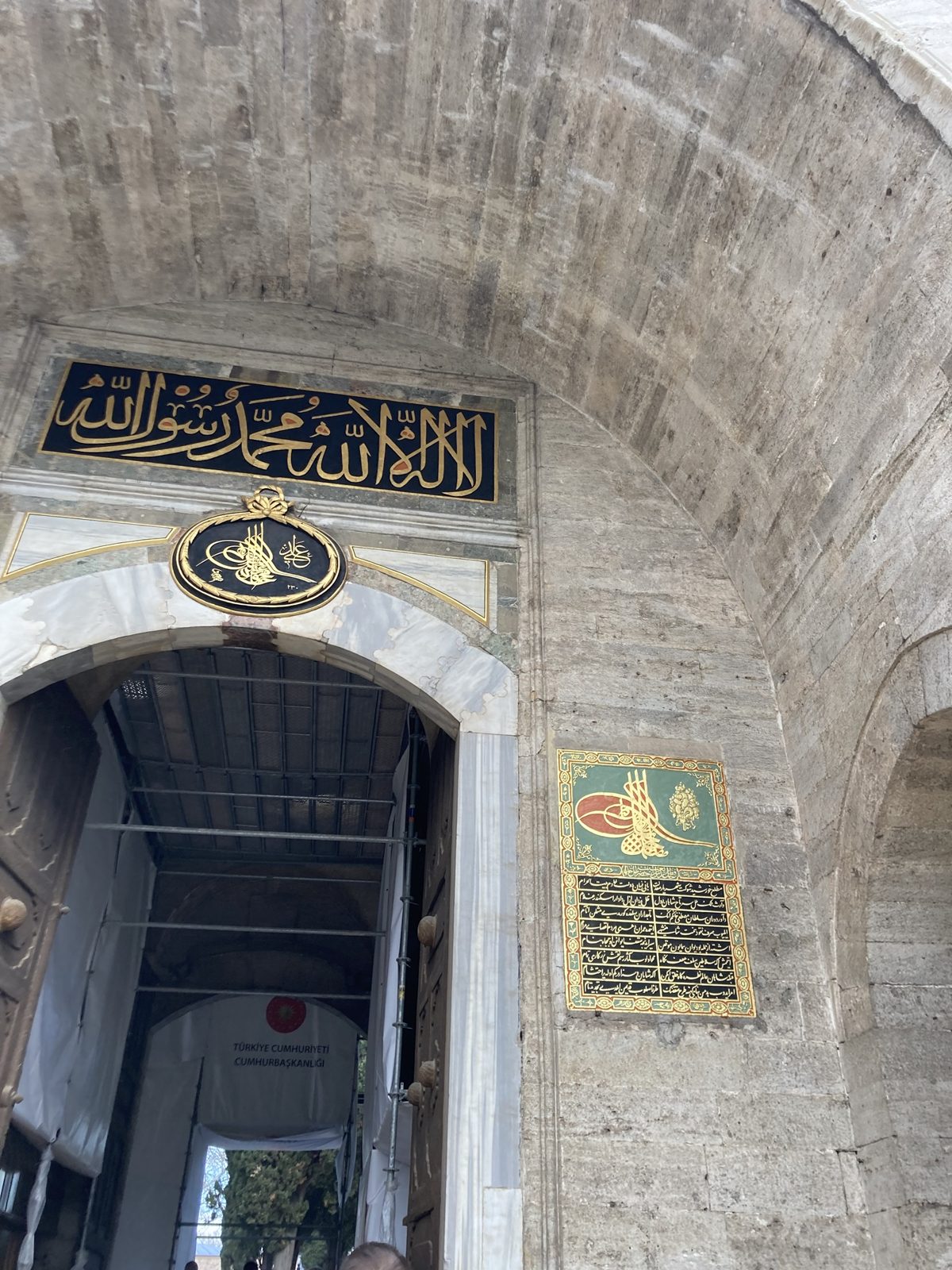
The palace is a sequence of courtyards linked by gates. A visitor first passes through the Bâb-ı Hümâyûn, the Imperial Gate. The gate into the second courtyard is the Bâb-üs-Selâm, and the third courtyard is entered through the Bâbüssaâde, the Gate of Felicity. The deeper you go, the more private the space becomes: affairs of state on the outside, the sultan’s close circle within.
The Imperial Council
In the second courtyard, in the domed chamber known as the Kubbealtı, the Divan-ı Hümâyun met. Led by the grand vizier and the viziers, it dealt with matters from taxation to justice. The Tower of Justice beside the chamber is one of the palace’s best-known silhouettes.
The Harem
The Harem was the private quarter of the imperial family. The sultan’s mother (the valide sultan), his consorts and children, and a large staff lived here. The part open to visitors today is a maze of rooms and courtyards added over the centuries.
The Enderun
Around the third courtyard stood the Enderun, the school where young men were trained for state service. Over time its graduates rose to palace posts and some to the highest offices of the state.
From palace to museum
In the 19th century the sultans moved to newly built palaces on the Bosphorus. When Sultan Abdülmecid settled in Dolmabahçe around 1856, Topkapı ceased to be the seat of government. It opened to the public as a museum in 1924, in the early Republic.
Topkapı is less a single building than a small city organised by courtyards and gates.
Where to see it today
The palace stands at Sarayburnu, right next to Sultanahmet. Look closely at the gates, with their calligraphy and the sultan’s tughra. The Fountain of Ahmed III in front of the palace dates from the Tulip Era. For the sultan who founded the palace, read The Conquest of Constantinople; for the ruler of its most splendid age, Suleiman the Magnificent. The Harem and some sections may need a separate ticket, so check the museum’s current information before you go.